

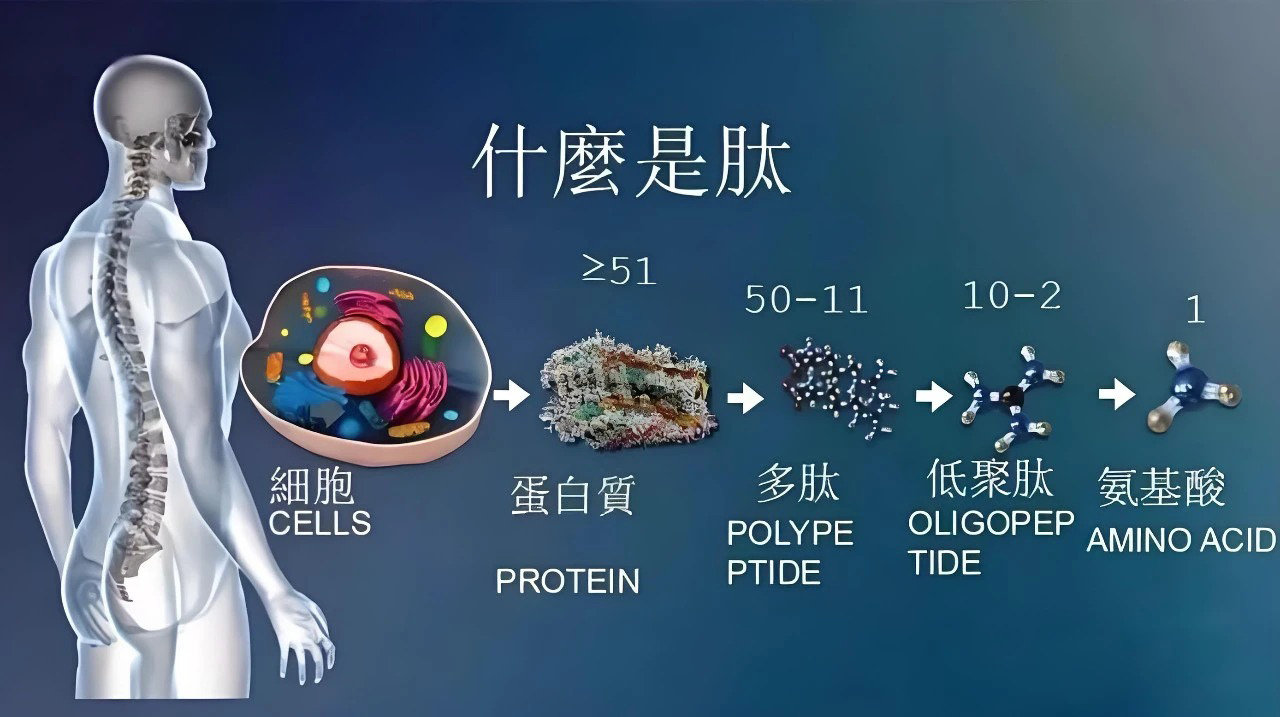
Peptides and proteins are primarily linked through amino acids, which are the basic building blocks of proteins. Human proteins are composed of more than 20 amino acids arranged in different proportions, and peptides are also composed of amino acids.
Scientifically, compounds composed of 20 to 50 amino acids are called peptides, while compounds composed of 51 or more amino acids are called proteins. Peptides with a molecular weight of 1000-5000 Daltons are called macropeptides or proteins. Peptides with a molecular weight between 180 and 1000 Daltons are called small peptides, oligopeptides, or low-molecular-weight active peptides.
Small molecule peptides are easily absorbed and non-antigenic
Proteins are highly species-specific macromolecules, difficult to absorb, and must be broken down into amino acids or small peptides through digestion before they can be absorbed.
Furthermore, proteins have very large molecular weights, generally above 10,000 Daltons. The larger the molecular weight, the more antigenic determinants on its surface, and the more stable its chemical structure. This makes them less likely to be destroyed or eliminated by the body, and they remain in the body for a longer period, providing ample opportunity to come into contact with antibody-producing cells and stimulate an immune response. Small peptides, on the other hand, have low or no antigenicity.
Small molecule peptides have extremely strong biological activity and a wide range of effects
Small molecule peptides possess high biological activity and can exert unique physiological functions even in extremely small amounts. They play a role in transmitting physiological information, regulating physiological functions, and maintaining normal physiological activities in the human body. The effects of small molecule bioactive peptides can be found from cells to tissues and organs.
Small molecule peptides will not cause nutritional excess
Nutritionally speaking, small molecule peptides are superior to proteins, as proteins can only be absorbed when broken down into small peptides. Excessive protein intake can have side effects because protein breakdown produces many byproducts in the body, including ammonia, keto acids, and urea, which can increase the burden on the liver, easily cause indigestion, and affect kidney function.
Excessive consumption of animal protein, such as eggs, dairy products, and meat, can also trigger heart disease. Patients with gout or liver and kidney failure should further limit their protein intake.
Small molecule peptides, when ingested, not only do not cause nutritional excess, but can also regulate the body’s nutritional balance.

Frequently Asked Questions
Q: What is the difference between drinking small molecule peptides and drinking amino acids?
A: After protein is ingested, it is broken down and mainly absorbed and utilized by the small intestine in the form of amino acids and small peptides. The main differences between small molecule peptides and amino acids are as follows:
(1) The absorption and metabolism rate of small molecule peptides is faster than that of free amino acids, and the probability of the body using small molecule peptides to synthesize proteins is about 25% higher than that of amino acids.
(2) The absorption mechanisms of small molecule peptides and amino acids are completely different. The absorption of small molecule peptides is characterized by fast transport speed, low energy consumption, non-saturation of carriers, and no competition or inhibition.
(3) Small molecule peptides have physiological functions that amino acids cannot match. They directly intervene in the metabolism of blood cells, brain and nerve cells, muscle cells, germ cells, endocrine cells, and skin cells, and participate in the regulation of various physiological functions of the body.
Post time: Sep-08-2026