

According to World Health Organization statistics, diabetes is associated with over 100 different complications—making it the disease with the highest number of known complications. Its acute and—particularly—chronic complications affect multiple organs, leading to high rates of disability and mortality; these complications severely compromise patients’ physical and mental well-being while imposing a heavy burden on individuals, families, and society.
Driven by lifestyle changes, an aging population, and rising obesity rates, the prevalence of diabetes in my country is on the rise. It has emerged as a major chronic non-communicable disease posing a serious threat to human health, ranking alongside cardiovascular and cerebrovascular diseases and cancer. Notably, cardiovascular and cerebrovascular conditions account for over 50% of diabetes-related deaths, while kidney disease accounts for 10%.
Today, we will explore what diabetes is and discuss its various complications. We will also look at how to manage the relationship between diabetes and pancreatic islet cells.

What is diabetes?
Diabetes is a common metabolic disease characterized by elevated blood glucose levels, resulting from defects in insulin secretion or impaired biological action that prevents insulin from performing its normal physiological function. Prolonged hyperglycemia leads to chronic damage and functional impairment of various tissues and organs, particularly the eyes, kidneys, heart, blood vessels, and nerves.
Diabetes is primarily classified into two types: type 1 diabetes and type 2 diabetes
Type 1 diabetes typically manifests during adolescence, though onset can occur at any age under 30. The onset is rapid and symptoms are pronounced; without insulin therapy, diabetic ketoacidosis may develop.
Type 2 diabetes predominantly affects individuals over the age of 40 and the elderly, with elevated blood glucose levels often resulting from obesity. The onset is gradual; some patients may remain asymptomatic regarding metabolic disturbances for a long period, while various chronic complications may develop as the disease progresses.
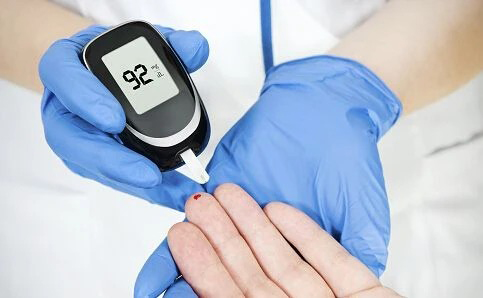
Diabetic complications
Diabetic patients with a long duration of disease and poor control often present with various complications or co-existing conditions.
Acute complications of diabetes
Diabetic Ketoacidosis (DKA): DKA is an acute complication of diabetes resulting from a worsening of the patient’s condition—characterized by markedly elevated blood glucose and insufficient insulin secretion—which disrupts the metabolism of carbohydrates, fats, and proteins, leads to excessive ketone body production, and causes severe consequences. It is the most common acute complication in patients with diabetes.
Hyperglycemic Hyperosmolar Syndrome (HHS): HHS is another clinical form of acute metabolic disturbance in diabetes, characterized by severe hyperglycemia, high plasma osmolality, and dehydration; patients often experience varying degrees of impaired consciousness or even coma. It is most commonly seen in elderly patients with type 2 diabetes.
Diabetic Lactic Acidosis: This condition refers to a sustained elevation of blood lactate levels—exceeding 5 mmol/L—caused by various factors; it results in hyperlactatemia and carries a high mortality rate.
Chronic complications of diabetes
Diabetic nephropathy: Diabetic nephropathy is a common complication of diabetes, affecting 20% to 40% of diabetic patients. It is also a serious complication and a leading cause of kidney failure in people with diabetes.
Diabetic Retinopathy and Blindness: Diabetic retinopathy is a highly specific microvascular complication of diabetes. Fundus examination reveals changes such as microaneurysms, venular dilation, hemorrhages, exudates, retinal edema, and neovascularization; it is a leading cause of blindness in patients with diabetes.
Diabetic neuropathy: Diabetic neuropathy is one of the chronic complications of diabetes.
Diabetic lower-extremity vascular disease: Diabetic lower-extremity vascular disease primarily refers to disease affecting the arteries of the lower extremities.
Diabetic Foot: Diabetic foot is one of the most serious and costly chronic complications of diabetes; severe cases can lead to amputation.

The Effects of Small-Molecule Peptides on Diabetes
Although numerous medications for treating diabetes are currently available—and can, when combined with dietary control and increased physical activity, help improve and stabilize the condition—these therapeutic measures still fail to completely and effectively prevent the onset of diabetes and its complications.
Therefore, exploring and developing novel and safer functional active substances from natural food sources is of great significance.
As researchers around the world delve deeper into the subject, they have discovered that small-molecule peptides play a significant role in helping to regulate blood sugar levels in people with diabetes.

Small-molecule peptides help prevent liver function damage in patients with diabetes.
High-dose peptides significantly increase SOD (superoxide dismutase) activity in diabetic model rats, while medium- and high-dose peptides reduce malondialdehyde levels in liver tissue. Therefore, small-molecule peptides exert a liver-protective effect by enhancing the antioxidant function of liver tissue.
Small-molecule peptides help prevent kidney function impairment in patients with diabetes.
Medium and high doses of the peptides significantly reduced serum levels of alanine aminotransferase (ALT) and blood urea nitrogen (BUN) in diabetic rats, demonstrating a protective effect against renal injury associated with the diabetic state. In non-diabetic rats, the small-molecule peptides also exhibited an effect in delaying chronic renal impairment.
Small-molecule peptides improve lipid metabolism disorders in patients with diabetes.
Animal studies have confirmed that small-molecule peptides help lower total triglyceride levels and increase high-density lipoprotein (HDL) levels—without significantly affecting low-density lipoprotein (LDL)—thereby helping to ameliorate lipid metabolism disorders in rats with diabetes or hyperinsulinemia.
Small-molecule peptides help prevent and treat cardiovascular and hypertensive complications associated with diabetes.
Aberrant expression of adipokines—such as free fatty acids, resistin, adiponectin, and leptin—plays a key role in the pathogenesis of diabetes and its associated cardiovascular complications. Animal studies indicate that small-molecule peptides may regulate blood glucose, blood lipids, and insulin metabolism by modulating the expression of these adipokines; this mechanism is linked to the prevention of cardiovascular complications in diabetes.
Small-molecule peptides have anti-skin-aging properties and promote wound healing.
One of the dermatological manifestations of diabetes is the difficulty of healing after skin injury. Small-molecule peptides play a significant role in preventing and alleviating diabetic skin complications, owing to their potent antioxidant capacity within skin tissue and their ability to promote collagen synthesis.

Small-molecule peptides and insulin
Human insulin is itself a peptide chain composed of 51 amino acids, whereas small-molecule peptides are combinations of peptide chains rich in various amino acids; they closely resemble the active peptides naturally secreted by the human body and are free from side effects.
Therefore, small-molecule peptides serve not only as a daily nutritional supplement for individuals with diabetes or diabetic complications but also help boost physical strength, accelerate organ repair, assist pancreatic cells in secreting insulin, enhance receptor activity, promote insulin-receptor binding, and aid in blood glucose regulation—thereby fulfilling the three primary goals of diabetic patients: eliminating insulin resistance, rapidly lowering blood sugar, and stabilizing blood sugar levels.

Individuals with diabetes who are taking small-molecule peptides must also pay close attention to diet control. When selecting staple foods, opt for a diverse range of whole grains—such as oatmeal, or porridges enriched with soybeans, black beans, buckwheat, or wheat. Prioritize cooking methods like steaming, boiling, stewing, and serving dishes cold (dressed), while minimizing the intake of deep-fried foods. Additionally, reduce salt consumption, including “hidden” sources of salt found in seasonings such as soy sauce, chicken bouillon powder, and MSG.
Post time: Sep-16-2026